
ThunderCore has always valued safety, and with Web3 rapidly evolving, staying secure is more critical than ever heading into 2026. Web3 security has advanced rapidly; wallets are smarter, protocols stronger, and security tools once limited to institutions are now accessible to everyone. Let’s discuss how to stay safe and what’s ahead!
The Basics: Web3 Safety in a Nutshell
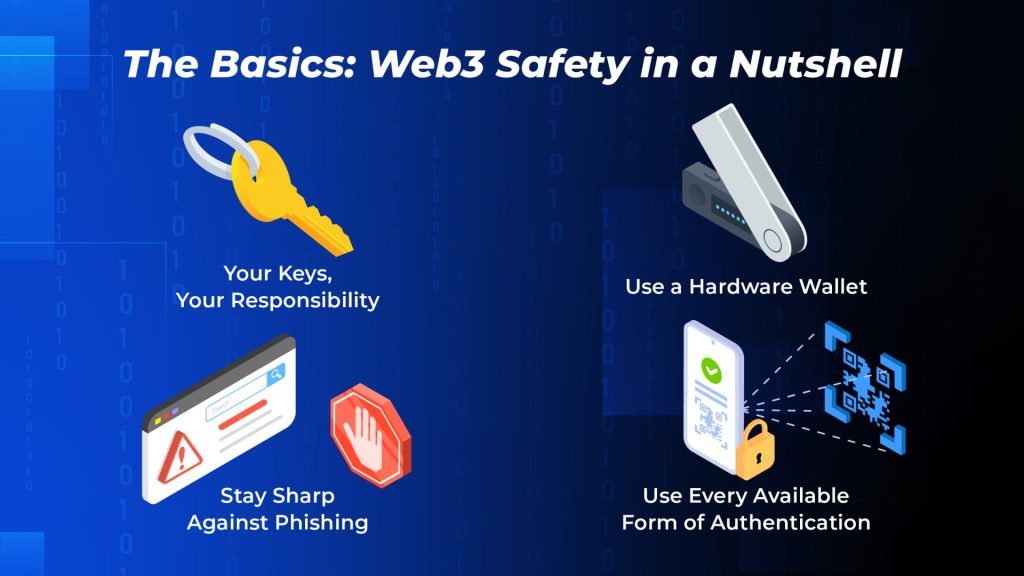
Most hacks and losses are still caused by simple, avoidable mistakes. Master these fundamentals, and you’ll already be safer than 95% of users.
- Your Keys, Your Responsibility: Never store your seed phrase digitally. Every veteran repeats this: write your seed phrase on paper (or better yet, etch it into steel) and keep it secure in multiple places. Never screenshot, email, or enter it on any website. If anyone asks for your seed phrase, it’s a scam.
- Use a Hardware Wallet: Ledger, Trezor, OneKey, Keystone, and newer players like NGRAVE or Tangem make cold storage effortless. While Ledger or Trezor might be better regarded due to reputation and track record, something like NGRAVE can be more advanced and optimized. Pricing, features, and ease of use are all factors to consider when choosing a wallet. Do your own research to see which one fits your needs! In 2026, almost every serious user keeps the bulk of their assets on a hardware device.
- Stay Sharp Against Phishing: Always type or bookmark dApp URLs manually or use trusted bookmarks. Enable “clear signing” in your wallet so you can actually read what you’re approving. Tools like Wallet Guard, Blowfish, and Fire can automatically flag malicious transactions before you sign.
- Use Every Available Form of Authentication: 2FA on exchanges, passkeys on wallets, biometrics on mobile devices, and hardware security keys for high-value accounts.
Take security seriously and always implement these essential defenses.
Going Further: Ways to Reinforce Safety
Once you master the basics, advanced protection feels like upgrading from a bicycle to a supercar.
- Smart Wallets / Account Abstraction (ERC-4337): By 2026, almost every major wallet (Safe, Zerion, Rabby, Argent, Rainbow, etc.) is a smart contract wallet by default. This unlocks game-changing features:
- Spending limits and whitelisted addresses
- Session keys: Use your wallet like an app without approving every transaction
- Built-in transaction simulation and protection against malicious contracts
- Multi-signature setups: A 2-of-3 Safe wallet means even if one device or seed is compromised, your funds are safe. Many users store one key on a hardware device, another on a secure phone, and a third with a trusted guardian.
- Advanced monitoring & insurance: Services like Cozy Finance, Nexus Mutual, or Unslashed, and new 2025 players offer real DeFi insurance that actually pays out. Pocket Universe and similar tools now auto-block almost all common exploit patterns. Check out their claim processes, insurance requirements, and coverage terms to see if this is something you’re interested in.
These tools and development truly highlight the importance of security and safety. But just as you would be cautious about every link you see, you should use these tools only after you have done your research and taken the necessary precautions.
Note: All the tools mentioned here are for informational purposes only and not intended as recommendations for users. Do your own research and approach anything mentioned in this article at your own risk.
The Future: Rising Threats and Development in Safety
Yes, new threats are emerging, but the beautiful part is that Web3 is moving as fast, if not quicker, than the threats.
The significant threat everyone talks about: Quantum computing
A sufficiently powerful quantum computer could eventually break ECDSA (used by Bitcoin, Ethereum, and most chains), making asset security vulnerable. Experts now estimate “Q-Day” (when this happens) is likely between 2030 and 2035. The industry is already preparing.
- NIST finalized post-quantum standards in 2024 (ML-DSA/Dilithium, ML-KEM/Kyber, etc.).
- The Ethereum roadmap already includes preparations for quantum resistance.
- Major wallets have announced or plan to release support for Dilithium and other PQC algorithms by late 2025 or early 2026.
- The Bitcoin community is actively discussing soft-fork proposals (e.g., OP_CAT + new quantum-resistant opcodes).
Other emerging threats include AI-generated deepfakes, voice cloning, and sophisticated social engineering. As facial recognition becomes vulnerable and voice cloning advances, users face new risks. However, countermeasures are evolving as well: on-chain reputation systems, zero-knowledge identity proofs, wallet-level AI guardians to monitor behavior, and strong passkey or biometric standards help protect user accounts. By implementing these security measures, users can effectively address emerging threats.
The pattern is clear: every time a new threat appears, Web3 responds with better primitives, faster than traditional finance ever could.
The Breakdown: 5 Things to Do or Note
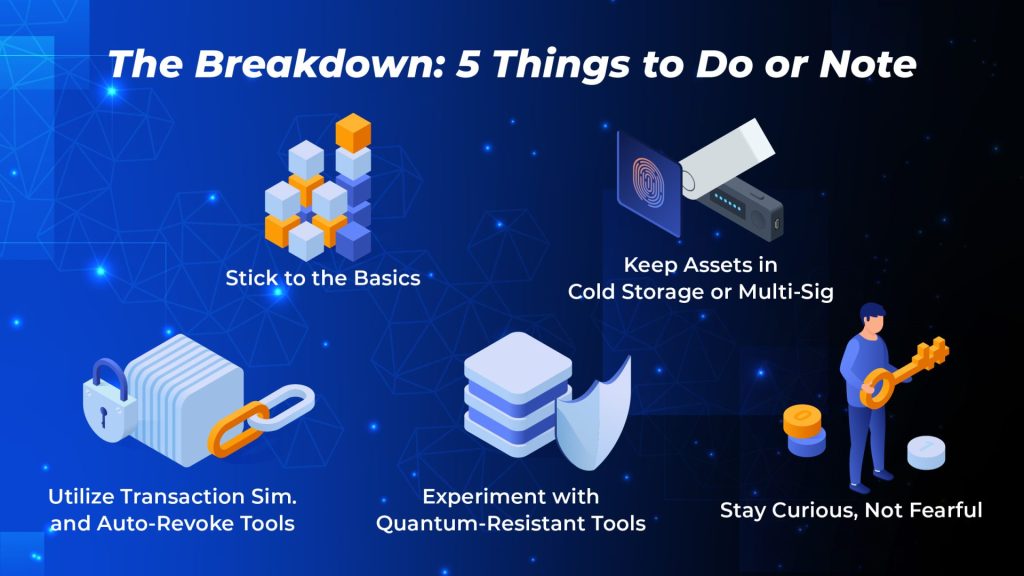
- Stick to the Basics: They offer most of the protection you’ll need.
- Keep Assets in Cold Storage or Multi-Sig: It can’t be stressed enough that hot wallets are for coffee money only. Your assets should stay cold!
- Utilize Transaction Sim. and Auto-Revoke Tools: They block 99% of exploits before you even notice.
- Experiment with Quantum-Resistant Tools: Keep an eye out for developments in quantum-resistant projects. Test them cautiously nd watch how Web3 develops around these developing measures.
- Stay Curious, Not Fearful: Keep an eye out for more development and projects that are working to keep you safe. The best weapon you have against attacks is staying informed!
Web3 in 2026 is safer, more efficient, and more powerful than ever. Take control, use the tools, and enjoy the ride.
Want to keep learning and stay ahead?
More informational and educational content will be coming as we bring back even more blog posts! We will also be diving into popular and topical subjects, so keep an eye out for more to come.

ThunderCore Official